What is a meme coin and how do traders actually make money on it?
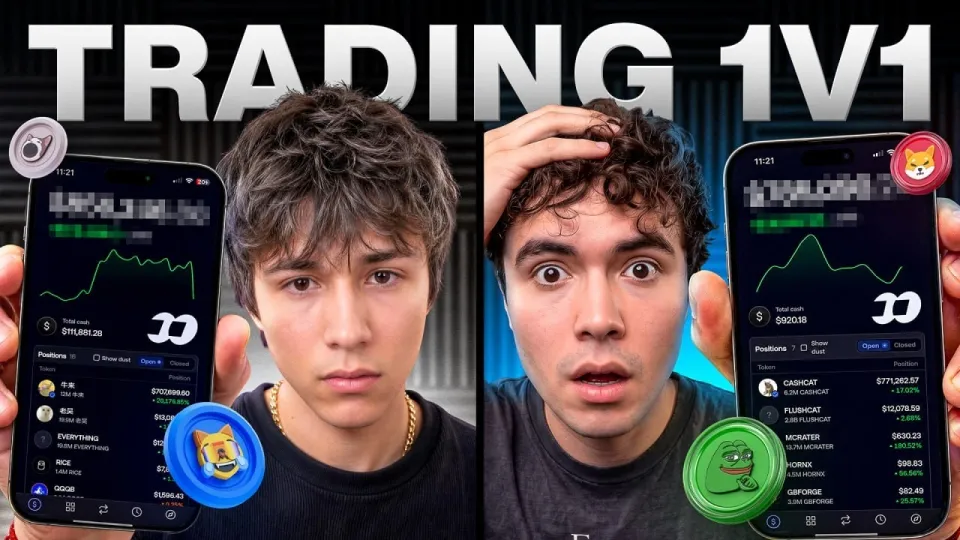
Video: I Challenged A Pro Memecoin Trader (Who Won?)
You can order the same kind of articles for your own video to boost it on YouTube and Google. Just message the Telegram bot @sat_sit_bot. It writes articles around your video, embeds the video and publishes them on popular niche websites (no ads). Your first 50 articles are free.
· based on the channel insentos
Key takeaways
- A meme coin is a token with no cash flow or product behind it — price is driven purely by attention, liquidity and community.
- Most meme coin trading happens on Solana and Ethereum, executed through aggregators and trading terminals such as Axiom.
- The insentos challenge video pairs the host with a guest trader who explains his thought process live while both trade in a call.
- Beginners usually lose because they chase pumps without a plan; the guests and commenters stress process over prediction.
- Realistic goals beat lottery goals: turning a small bankroll into a huge one is closer to gambling than to a repeatable strategy.
A meme coin is a cryptocurrency with no product, revenue or cash flow behind it — its price is set purely by attention, liquidity and community, which is why trading it is closer to reading a crowd than to valuing a business. Traders make money on meme coins by entering early on narrative and volume, sizing positions so a single loss cannot wipe the bankroll, and exiting into the crowd rather than holding for a story. The practical side of that process — terminals, wallets, execution — is what platforms like FOMO and trading tools such as Axiom are built around.
What actually makes a token a meme coin
A meme coin is defined by the absence of fundamentals, not by the joke in its name. Dogecoin and Shiba Inu are the classics, but the category now covers thousands of tokens launched daily, mostly on Solana and Ethereum, where anyone can mint a token and seed a liquidity pool within minutes. Because there is no earnings report to anchor the price, the only inputs that matter are:
- Attention — whether anyone is talking about the ticker on social feeds and in trading groups.
- Liquidity — how much capital sits in the pool, which determines how violently price moves on each buy and sell.
- Holder distribution — how much supply insiders and early wallets control, which sets up the risk of a sudden dump.
- Narrative — the story that makes new buyers feel they are early rather than late.
That is why meme coin analysis looks like market microstructure plus social monitoring, not like equity research. The same token can double on a single post and lose 80% of its value an hour later with no change in the underlying "business", because there is no business.
How a live meme coin trading session is structured
The insentos challenge video, published in August, puts the host and a guest trader in a call and trades meme coins side by side while explaining decisions out loud. The structure is worth copying as a learning method: instead of watching a highlight reel of wins, you watch the boring parts — scanning for candidates, rejecting most of them, sizing a position, and managing an exit while the price is still moving. Viewers picked up on exactly that, noting that the guest kept explaining his reasoning mid-trade rather than going silent. A recorded session like this is useful because it shows the ratio of looking to buying: most candidates get skipped.
The mechanics of buying and selling meme coins
Execution is where most beginners lose money before the market even moves against them. Meme coin trading usually runs through a non-custodial wallet plus a trading terminal or aggregator that routes the order across liquidity pools. The workflow looks like this:
- Fund a wallet with SOL or ETH — the native token pays gas and is what you swap from.
- Connect the wallet to a terminal such as Axiom or to an aggregator that quotes several pools at once.
- Check the contract address against the official source before buying; copycat tickers are the most common beginner trap.
- Set slippage deliberately — too low and the order fails on a fast move, too high and you get filled at a terrible average price.
- Plan the exit before entering: what price invalidates the trade, and what portion you sell into strength.
Each step costs money when done carelessly. Fees, priority payments for faster inclusion and slippage on thin pools can quietly eat a large share of a small position, which is why trade size relative to liquidity matters more on meme coins than on major tokens.
Risk management rules that separate traders from gamblers
Position sizing is the single decision that determines whether a meme coin trader survives long enough to get good. Because outcomes are fat-tailed — many small losses, occasional very large wins — the bankroll has to be split so that no single token can end the session. Practical rules experienced traders repeat:
- Risk a fixed small percentage of the bankroll per trade, not a fixed dollar amount that grows with confidence.
- Take partial profits on the way up instead of waiting for one perfect exit.
- Accept that a large share of entries will be losers; the edge comes from the winners being bigger, not from a high hit rate.
- Stop trading after a set number of losses in a day, because tilt is the most expensive emotion in this market.
Commenters on the challenge video made the honest observation that sessions like this often end in a loss, and that trading from an account with an audience is easier than trading quietly from a small wallet. Both points are correct and worth internalizing: a public challenge is entertainment with real money attached, not a track record.
Common beginner questions about meme coin trading
The questions new traders ask most often are about expectations, not tactics. Many arrive after watching a challenge video and want to know whether they can replicate the result. The honest answer is that the outcome of one session says nothing about skill, and that the traders who last are the ones who treat each trade as one of hundreds. Others ask about community access — a recurring frustration in comments is that groups and mentorships are advertised constantly but hard to actually join. A third common theme is whether to trade Solana or Ethereum meme coins: Solana offers faster and cheaper execution with more launches per day, while Ethereum pools tend to be deeper and slower-moving, so the choice changes the pace of the game more than the underlying skill.
Useful links
- FOMO — registration and bonus via the insentos referral link
- Axiom — trading terminal used for meme coin execution
- insentos on X
- insentos on Instagram
- insentos on TikTok
The takeaway
Meme coin trading rewards process, not prediction: pick tokens with real attention and enough liquidity, size positions so no single trade matters too much, and plan the exit before the entry. The insentos challenge format is valuable precisely because it shows the unglamorous parts — rejected candidates, mid-trade reasoning and the possibility of a losing session — rather than a montage of wins. Treat any single challenge as a demonstration of method, not as proof of an edge, and paper-trade or size down until your own results repeat. If you want to follow the same workflow, start with a registration through the FOMO link and keep the channel insentos bookmarked for more live breakdowns.
Source: I Challenged A Pro Memecoin Trader (Who Won?) · Markdown version
Questions & answers
Is meme coin trading just gambling?
It has a large gambling component when positions are sized carelessly or entries are driven by hype. With fixed small risk per trade, pre-planned exits and a filter for liquidity and holder distribution, it becomes a probabilistic strategy where the occasional large winner pays for many small losses. The difference is process, not the asset itself.
How much money do I need to start trading meme coins?
You can start with a small amount because Solana fees are low, but trade size must be judged against pool liquidity, not against your ambition. A position large enough to move the price on entry will also move it on exit, which is where beginners get hurt. Start with an amount you are fully prepared to lose.
Why do traders in challenge videos often end up losing?
A single session is a tiny sample, and the format adds pressure: trading live in front of an audience encourages faster and larger decisions. Viewers of the insentos challenge pointed this out directly. Judge the method shown — scanning, sizing, exiting — rather than the final balance of one stream.
What is the difference between Solana and Ethereum meme coins?
Solana offers cheap, fast transactions and a very high rate of new token launches, so the pace is quicker and competition is denser. Ethereum meme coins usually sit in deeper, slower pools with higher gas costs, which favors fewer and larger positions. The skill set overlaps, but the tempo and risk profile differ.